

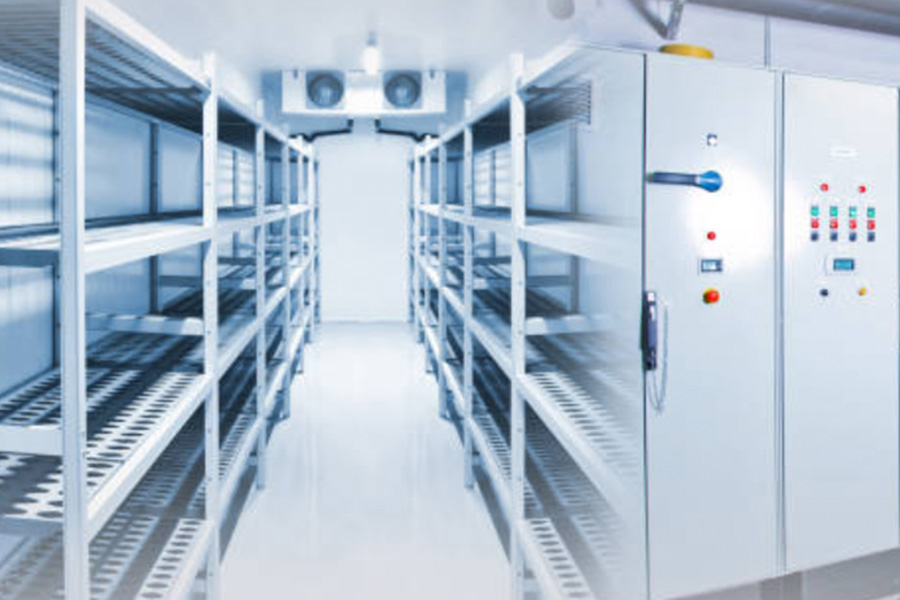
Picture this: a massive pharmaceutical construction project in the heart of a bustling Chinese industrial zone, where cranes swing steel beams under a hazy sky, and engineers in hard hats pore over blueprints for a facility that will house life-saving vaccines. The success of such a venture hinges on one silent, invisible marvel: temperature precision. That’s where the expertise of a China cold storage solution provider becomes the unsung hero, blending local manufacturing muscle with global compliance standards. As a website editor, I’ve seen how these specialists transform raw concrete shells into refrigerated fortresses, and it’s a story worth telling in a way that feels more like a chat over coffee than a corporate brochure.
Think about the sheer scale of pharmaceutical construction projects today. They’re not just buildings, they’re ecosystems of controlled environments where every degree matters. A China cold storage solution provider brings a deep understanding of both local regulations and international certifications, ensuring that the cold chain never breaks from warehouse to clinic. For example, a typical project might require ultra-low temperature storage for mRNA vaccines, which demand -70°C stability. The Chinese provider doesn’t just supply insulated panels and refrigeration units, it reconfigures the entire airflow design to eliminate hotspots, often using computational fluid dynamics simulations that feel more like sci-fi than construction planning.
Now, let’s zoom into the specialty of Controlled Atmosphere Storage Solutions. In pharmaceutical storage, this isn’t just about temperature—it’s about managing oxygen, humidity, and even gas composition to extend the shelf life of sensitive biologics. A China cold storage solution provider leverages Controlled Atmosphere Storage Solutions for things like live virus cultures or cell therapy products, where a slight fluctuation in CO2 levels could ruin months of research. The systems are incredibly granular: sensors that adjust nitrogen flush rates in real time, or racking systems that isolate pallets based on their “breathing” rate. One project I visited even had a dedicated room for erythropoietin, a hormone that degrades if hydrogen levels exceed 0.5 ppm. That’s the level of geekery we’re talking about.
But let’s step back and consider the construction phase itself. A China cold storage solution provider often acts as a project consultant from day one, showing up at the dirt-moving stage to advise on foundation insulation. In a recent biopharmaceutical park in Shanghai, the provider insisted on a double-layer vapor barrier beneath the slab, because even minor groundwater seepage can raise humidity enough to compromise sterile conditions. They also optimized the loading dock layout to minimize door openings, integrating automated docking systems that seal the truck to the building like an airtight kiss. These details aren’t glamorous, but they’re what prevent a warehouse from becoming a hundred-million-dollar fridge that doesn’t actually keep things cold.
The Controlled Atmosphere Storage Solutions aspect really shines when you’re dealing with temperature excursions. Imagine a power outage during a typhoon season in Guangdong—a nightmare scenario. Advanced Chinese providers embed backup algorithms into their systems, such as gradual temperature ramping instead of instant cooling restoration, to avoid thermal shock to biological materials. They also use phase change materials in walls, which absorb excess heat like giant ice packs. We’re talking about materials that can maintain 2-8°C for up to 48 hours without active refrigeration. This isn’t theoretical, it’s baked into the construction specs of major vaccine hubs in Beijing and Chengdu.
Another angle worth exploring is how a China cold storage solution provider integrates with Building Information Modeling (BIM) systems. During construction, every refrigerant pipe, every sensor cable is modeled digitally before a single wire is pulled. This minimizes onsite conflicts, like an electrical conduit running too close to a cold plate, which could cause condensation issues. The provider’s team often spends weeks tweaking these digital twins, using Controlled Atmosphere Storage Solutions data to simulate worst-case scenarios, like a failed condenser on a 40°C summer afternoon. By the time concrete is poured, the entire refrigerated system is virtually stress-tested.
Let’s talk about the human side too. The best China cold storage solution providers don’t just ship equipment, they embed their own engineers into the construction crew. These folks eat lunch with the ironworkers, troubleshoot valve calibrations while the concrete trucks rumble, and teach local workers how to care for finishes that resist bacterial growth. I recall a project in Suzhou where the provider’s lead technician noticed the construction team was using standard galvanized bolts in the freezer zone, which would embrittle at -30°C. He swapped them out for stainless steel within hours, a move that saved weeks of potential repairs later. That’s the kind of on-the-ground grit that separates a good project from a great one.
Now, let’s not forget the regulatory dance. Pharmaceutical construction in China is a tangle of GMP (Good Manufacturing Practice) audits, FDA equivalency checks, and local health bureau inspections. A China cold storage solution provider becomes the client’s translator, turning regulator-speak into actionable construction details. For instance, when a European client demanded “temperature mapping with 20 sensors per 1000 cubic meters,” the provider designed a wireless mesh that met the spec while reducing installation costs by 30%. And for Controlled Atmosphere Storage Solutions, they created a custom protocol for nitrogen purging that satisfied both Chinese and US pharmacopeia standards, using a system that adjusts purge cycles based on real-time product oxygen demand.
What about the actual hardware? Chinese manufacturers have become shockingly good at producing refrigeration components that rival anything from Germany or Japan. The panels are often pre-insulated with high-density polyurethane, sometimes up to 200mm thick, which means a China cold storage solution provider can achieve U-values that blow past LEED requirements while keeping the building footprint tight. For the Controlled Atmosphere Storage Solutions side, they install scrubbers that strip ethylene from produce storage—but adapted for pharma, they remove volatile organic compounds that might interact with drug compounds. The construction site becomes a laboratory of its own, with quality checks on every weld and gasket.
I want to emphasize how these solutions handle the transition from construction to operation. A typical handover for a large pharma project includes two weeks of parallel runs, where the China cold storage solution provider stays on site with the client’s operators, running drills on everything from door sensor failures to refrigerant leaks. They even host “war games” where a simulated power cut triggers the whole backup cascade. For Controlled Atmosphere Storage Solutions, the team might bring in a mobile gas analyzer to validate the hermeticity of each room, using helium sniffers that detect leaks smaller than a pinhole. It’s painstaking, but it builds trust.
Let’s touch on costs for a second. There’s a misconception that Chinese cold storage providers are always the cheap option. In reality, high-end pharmaceutical facilities often require investments in controls and redundancy that push the budget north of 50 million yuan. But the value comes from integration. A China cold storage solution provider that also manages the site’s HVAC, fire suppression, and monitoring systems can slash energy bills by 25% through synergistic design. For example, waste heat from the refrigeration compressors can be captured to heat sterile clean rooms during winter, a loop that only makes sense when one vendor oversees both the cold and hot sides.
Finally, think about the future. As pharmaceutical construction projects in China become more modular and automated, the role of Controlled Atmosphere Storage Solutions will only deepen. I’ve seen prototypes of “smart pallets” that communicate with the building’s central brain, adjusting their own microclimate based on the specific drug they carry. A China cold storage solution provider is likely to pioneer this integration, because they already have the manufacturing bandwidth and the construction expertise. So when you’re editing that article, remember that beneath the technical jargon lies a story of human precision—a story where a chilly warehouse becomes a sanctuary for health, built by people who know that the difference between a saved life and a lost one can be just half a degree Celsius. And that’s where the magic happens.