

At a glance:
- Stuck loads in truck bodies slow down unloading cycles and reduce the number of trips completed per day, directly impacting revenue.
- Carryback reduces payload capacity, forcing additional trips to complete the required consignment volume, which increases fuel consumption and workload.
- Uneven release adds strain on truck bodies and hydraulic systems, accelerating wear and driving up maintenance costs.
- Residual material distorts load measurements, leading to billing inaccuracies, compliance risks and potential financial penalties.
Fleet efficiency is typically measured through fuel consumption, equipment utilisation rates, load turnaround times and maintenance downtime. One critical factor that impacts these metrics is material discharge from the truck during unloading.
Stuck or slow-releasing loads might be dismissed as a minor, one-off issue. However, if you deal with wet, adhesive, or high-friction loads, the issue becomes recurring. Continuous poor load release affects operation delays, strains equipment, reduces payload accuracy and increases fuel consumption. The solution lies in using low-friction liner systems to improve material flow.
In this article, we will understand how stuck loads during unloading problems translate into financial losses.
Reduced Daily Fleet Output
One of the most immediate impacts of stuck loads is extended unloading time. When materials adhere to the truck body or fail to discharge during tipping, your team is forced to remove the residual materials manually.
Over time, these cycle-time delays reduce the number of trips completed per day, directly affecting daily output and revenue per truck.
In multi-vehicle operations, even small delays compound quickly. A consistent pattern of slow unloading across trucks reduces the total number of loads delivered, while costs such as fuel, labour and operating time remain unchanged, resulting in a direct revenue loss.
Increased Fuel Costs and Reduced Payload Efficiency
When material remains in the truck body after unloading, it is carried back to the loading site (also known as carryback). Because the available space is reduced, trucks are forced to operate below optimal efficiency.
This means either running additional trips to move the same volume, driving up fuel, labour and wear or moving less material per day, reducing revenue. In both cases, the cost per tonne increases, impacting overall fleet profitability.
At the same time, the hydraulic system needs to raise the tipping angle to release the stuck load, which increases the fuel consumption. Over time, this additional fuel use raises operational costs across the fleet.
Accelerated Equipment Wear and Maintenance Costs
Raising truck bodies higher also adds mechanical stress on the hydraulic systems and structural components. This not only increases the risk of truck rollover, but also accelerates wear on cylinders, hinges and structural components. These issues lead to frequent part failures and repairs.
At the same time, retained material, typically abrasive substances, continues to grind against the truck body during partial discharge. This friction accelerates surface wear and shortens equipment lifespan.
Over time, this results in higher maintenance costs, increased downtime and greater operational risk, directly impacting overall fleet operating costs.
Inaccurate Load Weights Lead to Revenue Leakage and Compliance Risks
Another consequence of stuck material in tipper trucks is inaccurate load measurement. When material is retained from previous trips, it distorts weight calculations for subsequent loads.
This creates challenges for billing accuracy and load tracking. Over time, these discrepancies can result in revenue leakage, particularly in operations where payload accuracy is critical.
There are also compliance risks. If retained material is not accounted for, vehicles may unintentionally exceed weight limits, leading to penalties and operational disruptions. These uneven load distribution problems further complicate compliance with transport regulations and reduce operational reliability.
Stuck loads are a recurring inefficiency that impacts your finances due to cycle time delays, fuel inefficiencies, accelerated wear and compliance risks. For fleet managers, improving the surface interaction between the materials and the truck body is a practical way to address these issues.
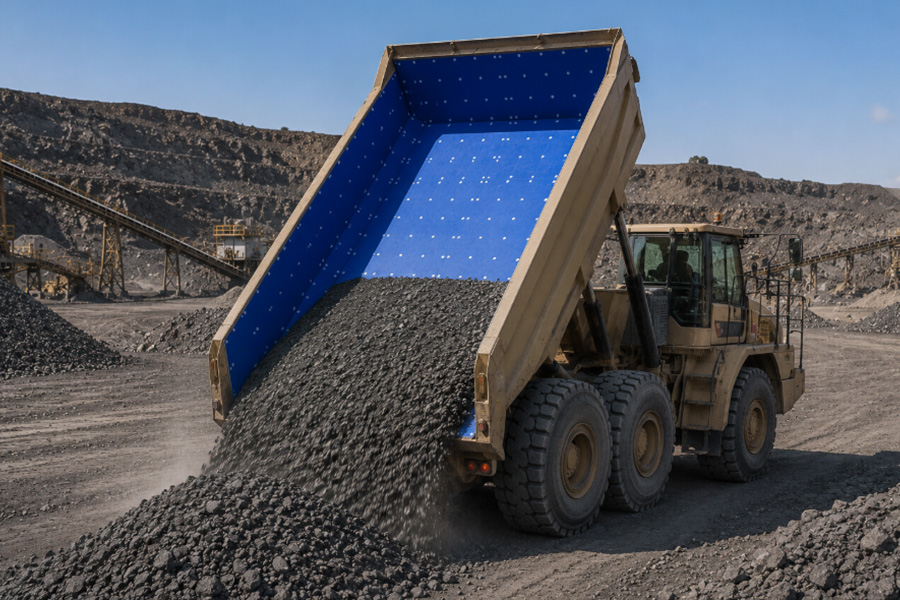
Using a premium-grade UHMWPE liner system for your truck beds is one of the solutions you can explore. With its low coefficient of friction, these liners allow materials to move more freely during tipping, reducing carryback and minimising the need for repeated unloading attempts.
At the same time, their high abrasion resistance helps protect truck body surfaces, reducing wear and lowering long-term maintenance requirements. This improves load movement and discharge.