

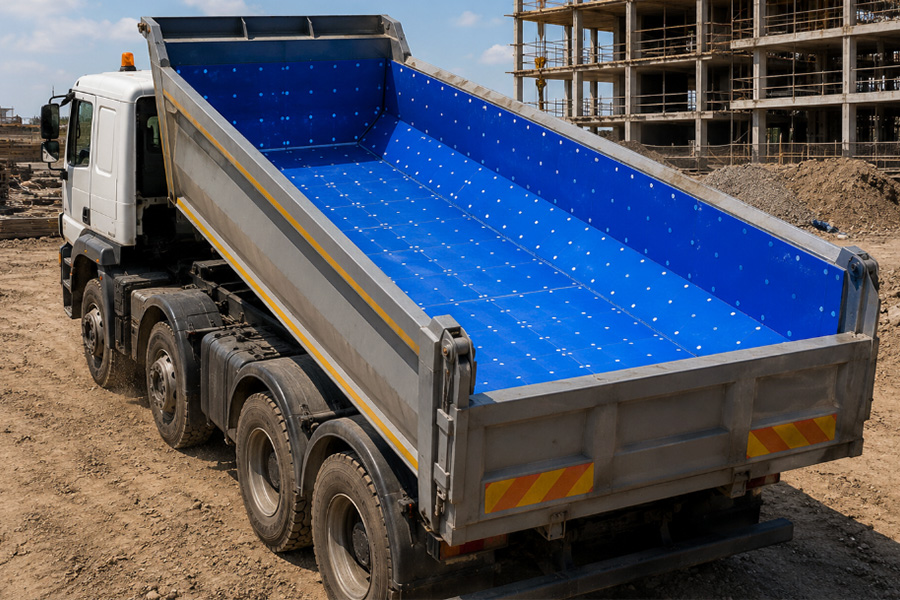
At a glance:
- The low-friction surface of OKUSLIDE® helps prevent bulk materials from sticking inside hoppers, chutes and truck bodies.
- Its smooth liner design minimises residue build-up, enabling cleaner, more efficient unloading.
- Its abrasion-resistant properties help reduce wear caused by aggregates and other abrasive materials.
- OKUSLIDE® resists moisture, UV exposure and corrosion while supporting more efficient discharge.
Efficient handling of bulk materials is a daily priority in many industrial operations. Equipment such as truck bodies, hoppers and conveyors must withstand constant contact with bulk materials that can stick and wear down surfaces.
These conditions can lead to operational issues, including poor material flow, surface wear, residue build-up and increased maintenance demands. If left unmanaged, these factors slow unloading and reduce efficiency.
Engineered liner materials play an important role in addressing these challenges. Solutions like OKUSLIDE® UHMWPE liners are designed to reduce friction, protect equipment surfaces and improve material movement during handling and discharge.
The sections below explain the common industrial challenges and demonstrate how OKUSLIDE® liner technologies effectively address them.
Material Sticking and Poor Flow in Bulk Handling Systems
Bulk materials do not always move smoothly through handling equipment. Fine particles, moisture and compaction can cause materials like grain, fertiliser and sand to stick to steel surfaces. This issue often arises inside hoppers, chutes and truck bodies used to handle or transport bulk materials.
These material sticking issues frequently disrupt normal discharge patterns. As a result, they can create blockages or uneven flow, slow operations and require manual clearing.
OKUSLIDE® helps address this problem by providing a low-friction liner that reduces the likelihood of materials sticking during discharge. The engineered polymer allows materials to slide more easily along the liner surface during discharge. This helps maintain smoother movement through equipment and reduces interruptions related to bulk material flow issues.
Carryback and Material Build-Up After Discharge
In many bulk material handling systems, unloading can leave residual material inside equipment. Residual material can remain attached to surfaces inside truck bodies, bins and conveyors, known as carryback. Over time, this residue can reduce payload efficiency and increase the need for cleaning between loads.
OKUSLIDE® reduces this problem through its smooth, non-stick surface, which helps limit the amount of material remaining after discharge. Less residue clings to equipment surfaces during unloading. The result is cleaner, faster discharge and more consistent day-to-day handling performance.
Excessive Wear on Industrial Equipment Surfaces
Equipment in heavy industries frequently handles abrasive materials such as aggregates, minerals, coal and recycled products. When these materials constantly come into contact with metal surfaces, it can lead to wear and tear on industrial equipment. This not only reduces the lifespan of the equipment but also increases the need for maintenance.
OKUSLIDE® acts as a protective layer that absorbs friction before it impacts the underlying structure. Its abrasion-resistant polymer surface helps protect equipment from direct contact with materials, promoting a longer service life and reducing repair frequency.
High Tip Angles Required for Unloading
You may have to raise truck bodies to steeper angles to discharge sticky materials. This often occurs when material flow issues cause loads to resist movement along steel surfaces. Higher tipping angles can slow unloading cycles and place additional pressure on hydraulic systems.
OKUSLIDE® reduces surface friction, allowing materials to begin sliding sooner during the tipping process. Because loads move more easily across the liner, discharge can occur at lower angles. This helps improve bulk material handling efficiency and makes unloading operations more consistent.
Environmental Exposure Causing Surface Degradation and Corrosion
Many industrial operations take place in environments where equipment frequently encounters harsh weather. Moisture, UV radiation and changing temperatures can gradually affect the performance of exposed metal surfaces. In equipment like truck bodies, hoppers or storage bins, these conditions can cause corrosion or surface damage over time.
OKUSLIDE® addresses these issues through its engineered polymer design. Unlike untreated steel, this material resists moisture absorption and does not corrode in wet or outdoor conditions.
Its UV-stable properties help maintain surface integrity in areas with frequent sun exposure. Together, these features allow the liner to operate reliably in outdoor or semi-exposed environments while protecting the equipment beneath it.
Industrial operations often face issues such as friction, abrasion, material build-up and environmental exposure. Problems such as poor material flow, carryback, surface wear and inefficient unloading can gradually affect equipment performance and increase maintenance needs.
Solutions like OKUSLIDE® reduce friction, limit wear and support smoother material movement, while protecting equipment from environmental and operational stress. By addressing common industrial challenges at the surface level, these liner technologies help maintain more reliable and efficient material handling.
To solve common industrial material handling challenges, choosing the right liner solution matters. Work with a high-quality engineering plastics supplier offering durable solutions like OKUSLIDE® to protect equipment and improve material flow.