

Key Takeaways
- First-time eyebrow embroidery focuses on structural design, pigment mapping, and conservative depth control.
- Touch-up eyebrow embroidery prioritises colour adjustment, density refinement, and longevity correction.
- Skin response, pigment retention, and healing behaviour differ significantly between first-time and repeat procedures.
- A professional eyebrow salon applies different technical decisions, timelines, and risk controls for each client type.
Eyebrow embroidery is not a single, standardised procedure applied uniformly to every client. The technical approach taken by an eyebrow salon varies substantially depending on whether the client is undergoing the procedure for the first time or returning for a touch-up session. While both fall under eyebrow embroidery, the objectives, execution, and decision-making processes are different. Knowing these differences is essential for managing expectations, assessing value, and recognising professional standards within an eyebrow salon setting.
Structural Design
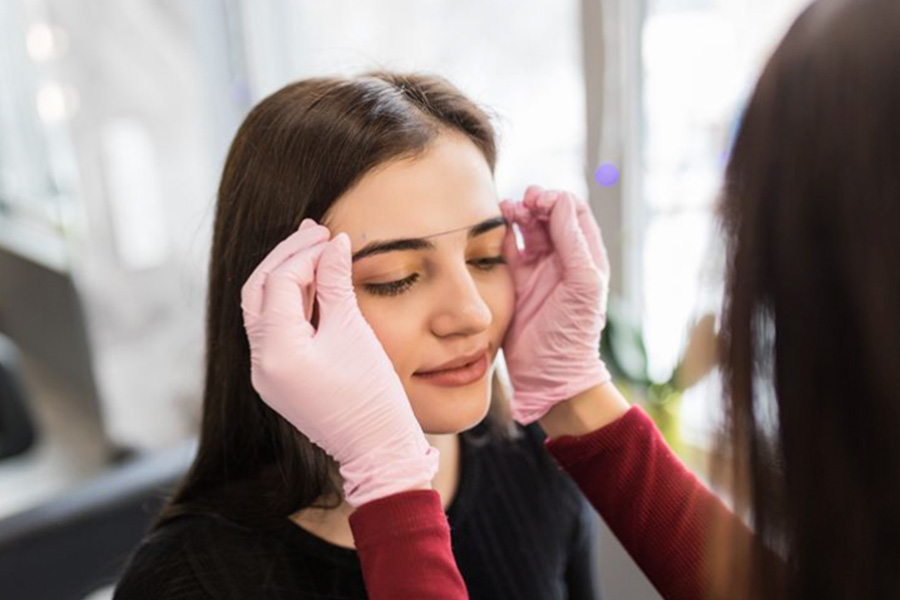
Eyebrow embroidery for first-time clients begins with structural design. The eyebrow salon must establish brow shape from scratch, taking into account bone structure, muscle movement, asymmetry, and natural hair growth. This stage involves mapping, proportion checks, and conservative planning because the pigment has no previous reference point on the skin. Decisions made during this phase determine how the brows will age, fade, and respond to future touch-ups.
Meanwhile, for touch-up clients, the structure already exists. The focus shifts from creation to refinement. The eyebrow salon evaluates existing pigment placement, line direction, and shape stability. Adjustments are typically limited to minor extensions, density balancing, or soft corrections rather than complete redesigns. Over-aggressive restructuring during a touch-up increases the risk of pigment saturation and blurred results.
Pigment Strategy and Colour Control
Pigment selection is cautious in first-time eyebrow embroidery. The eyebrow salon considers skin undertone, healing behaviour, and long-term colour changes. Initial sessions usually apply pigment at lighter intensities because first-time skin often retains colour more unpredictably. Over-depositing pigment during the first session increases the risk of dark healing and uneven fading.
Touch-up sessions use a different pigment strategy. The eyebrow salon assesses how the previous pigment healed, whether it oxidised, faded warm or cool, or lost definition. Pigment choices during touch-ups are corrective rather than exploratory. The goal is to stabilise colour, not introduce a new base tone. This instance requires accurate documentation and technical consistency from the original procedure.
Skin Response and Technical Pressure
Skin response differs significantly between first-time and touch-up clients. First-time skin is intact and untraumatised, requiring lighter pressure and conservative stroke depth. The eyebrow salon monitors swelling and redness closely because excessive trauma during the first procedure affects pigment retention and scarring risk.
Touch-up clients present pre-conditioned skin. The eyebrow salon adjusts needle pressure and stroke layering to avoid re-traumatising healed tissue. Repeated passes over the same area are avoided to prevent patchy saturation or long-term texture issues. This technical restraint is a key indicator of professional practice.
Healing Behaviour and Downtime Expectations
First-time eyebrow embroidery typically involves a longer visible healing phase. Flaking, temporary darkening, and uneven colour loss are typical. The eyebrow salon prepares first-time clients for these changes and schedules touch-ups only after complete stabilisation.
Touch-up sessions usually heal faster, but expectations differ. The changes are more subtle, and clients should not expect dramatic visual shifts. The eyebrow salon focuses on fine-tuning rather than transformation, and healing outcomes are evaluated over shorter timelines.
Risk Management and Decision Thresholds
Risk management is stricter for first-time clients. The eyebrow salon limits pigment load, avoids dense layering, and prioritises reversibility. Meanwhile, for touch-up clients, the risk lies in overworking existing pigment. Professional judgement determines when no further embroidery is needed, even if the client requests additional enhancement.
Conclusion
First-time and touch-up eyebrow embroidery procedures serve different technical purposes. While both require precision and planning, the eyebrow salon’s approach changes from foundational design to controlled refinement. Clients who understand these distinctions are better equipped to evaluate procedure outcomes, timelines, and professional standards. Eyebrow embroidery is cumulative, and long-term results depend on restraint as much as technique.
Contact Carragheen and let us determine whether a first session or touch-up is appropriate based on your skin condition and existing results.