

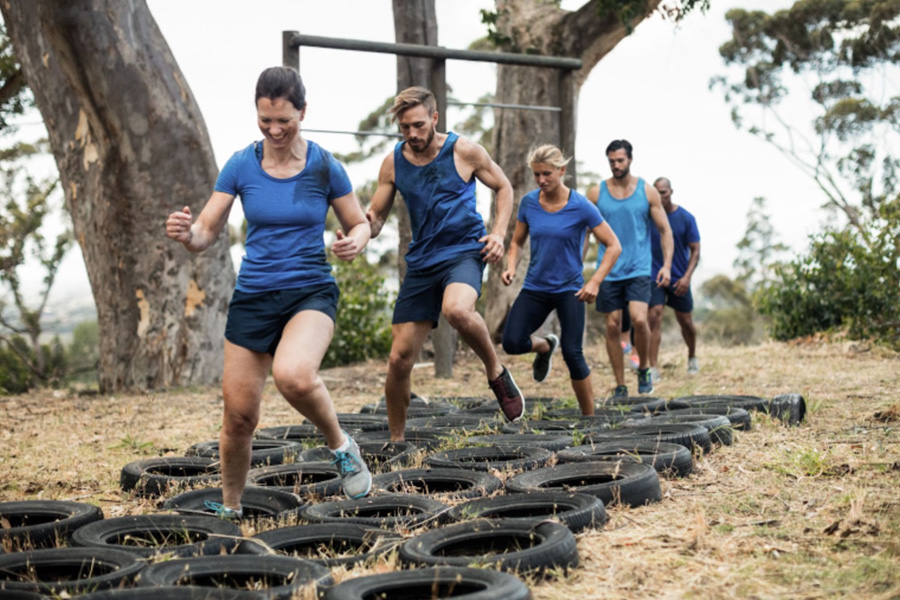
Physical challenges keep people alert. When bodies move, attention follows. Team sessions that involve balance, climbing, lifting, or coordinated movement hold interest because participants stay present. No one can drift off while holding a rope or waiting for a teammate’s signal. The energy stays natural, and engagement grows without forced enthusiasm.
Well-designed activities rely on structure and pacing rather than hype. Tasks feel purposeful, and progress becomes visible. Each decision affects the group, which keeps everyone involved from start to finish.
Movement Keeps Minds Present
Physical effort pulls focus away from screens and side chatter. Tasks that require stepping, reaching, or stabilising encourage participants to stay aware of their surroundings and teammates. Communication improves because short, clear instructions matter while moving.
Carefully planned sessions use time limits and clear goals to maintain momentum across an outdoor team building activity. Studies from workplace training providers show that sessions involving moderate physical effort maintain attention longer than lecture-based formats. Participants remain engaged because every step has an immediate outcome.
Shared Challenge Builds Trust Naturally
Trust grows when people rely on each other to complete a task safely. Controlled challenges introduce mild risk without danger. Verbal guidance, steady pacing, and shared responsibility become essential.
Sessions involving height and balance rely on strict safety frameworks, which is why high-element activities follow documented operating rules. Equipment inspections, weight ratings, and participant briefings follow published standards set by international adventure facilitation bodies. These verified practices allow teams to focus on cooperation, knowing safety procedures are in place.
Physical Problem Solving Feels Practical
Active challenges rarely follow a script. Obstacles behave differently depending on how a group approaches them. Teams adjust grips, spacing, and movement order as conditions change. Solutions evolve in real time.
Facilitators record decision timing and communication clarity during a team building outdoor activity, using the task flow as a reference point. Data collected over repeated sessions shows that groups improve task completion speed once instructions become concise and roles stabilise. Learning comes from doing, not discussion alone.
Natural Roles Appear Under Pressure
Movement-based tasks reveal how groups organise themselves. Some participants focus on guiding others, some check safety details, and others manage pace. Roles surface without formal assignment because the situation demands structure.
As sessions progress, frequent role shifts appear during high-element activities, allowing leadership and support to rotate. Someone who leads one challenge supports another later. Observations from corporate training reviews link this flexibility to stronger collaboration during regular work tasks.
Balanced Difficulty Sustains Engagement
Engagement drops when tasks feel unreachable or too easy. Effective physical challenges sit in the middle. Adjustable platforms, optional height routes, and timed breaks help participants contribute without strain.
Providers use modular setups tested through ongoing programme improvements when designing a team building outdoor activity. These refinements come from incident reporting systems, safety audits, and participant feedback collected across operating seasons.
Measured Reflection Turns Action Into Insight
Short debriefs help teams process what happened. Reflection works best when linked to direct examples. Who spoke first, who adjusted the plan, and how support was offered provide clear reference points.
Facilitators track measurable details such as response time, instruction accuracy, and group spacing while running high-element activities. Referencing these recorded observations improves discussion quality and keeps analysis grounded in facts.
Why Physical Challenges Continue to Work
Physical tasks stay engaging because they demand cooperation, awareness, and shared effort. Participants remain involved because outcomes depend on collective action. Progress becomes visible through movement, not slides or speeches.
Teams seeking structured, engaging sessions that combine practical skill use with clearly defined safety systems can contact Forest Adventure to plan physical challenge programmes aligned with professional standards and real-world team needs.